Hyaluron pens are a needle free device that use pneumatic pressure to force hyaluronic acid into the skin. The FDA recently issued a warning on 10/8/21 advising against these devices, as they have been linked to serious injuries and irreversible damage. These pens are unpredictable because the levels of pressure distributed with each push are uncontrolled and uncalibrated pressure.
Some of the risks of using hyaluron pens for dermal fillers include:
Allergic reactions
Bleeding
Bruising
bacterial, fungal, or viral infections
the potential for disease transmission if shared with others
Blood-vessel blockage that can lead to necrosis
Blindness
Stroke
Scarring
Damage to the eyes from the device pressure
Skin lumps or discoloration.
Dermal filler is only FDA approved to be administered with a needle and syringe, and on occasions a cannula. It is important to consult with a trained medical provider to work towards an aesthetic goal that is not only beautiful but also safe.
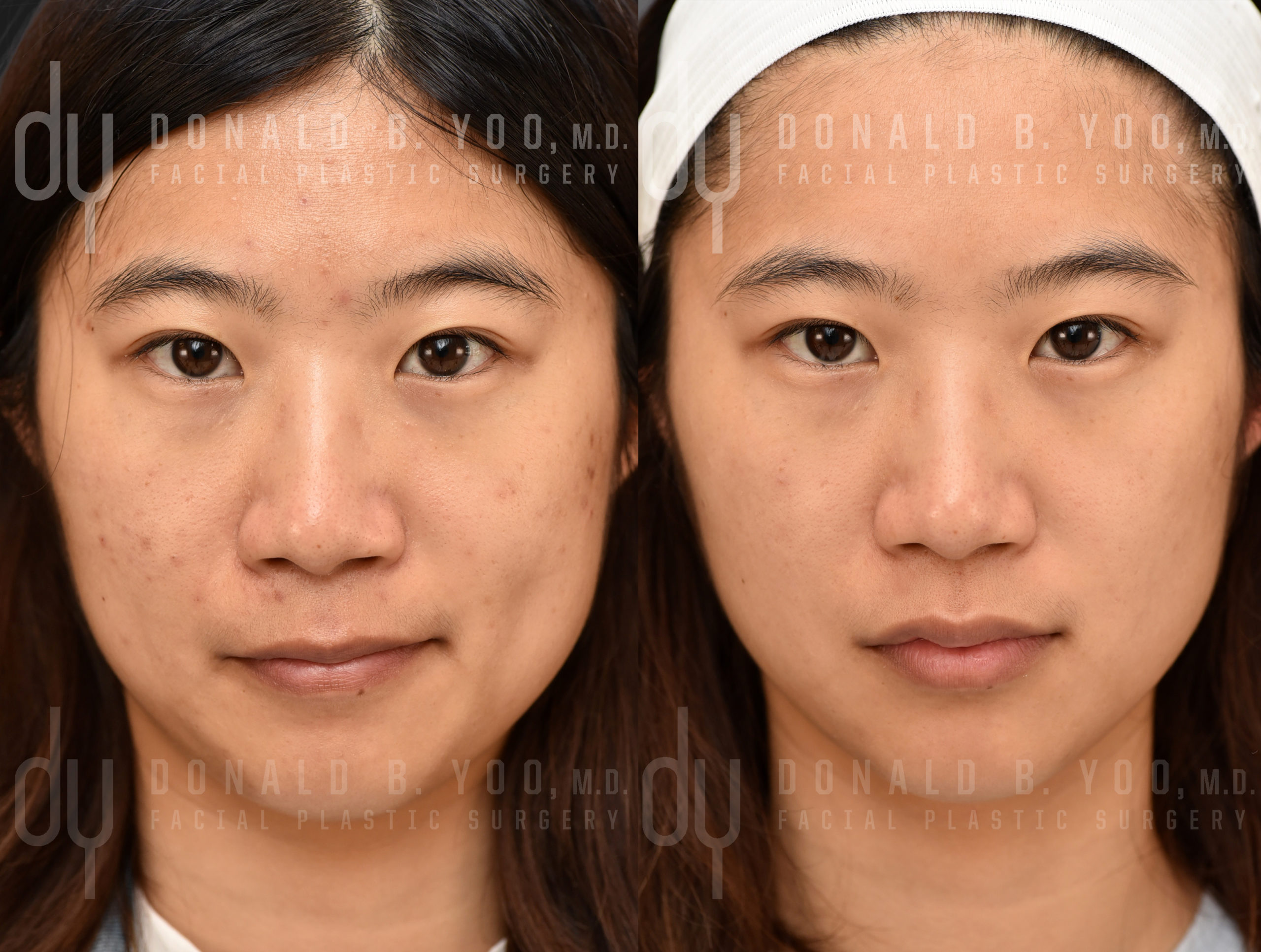
After 2 Picofocus picosure treatments to improve her acne scars and hyperpigmentation
Microneedling vs. Picosure in regards to Melasma
Microneedling is effective in treating areas of hyperpigmentation; however, you would need further consultation to determine which treatment is best for you. In regards to laser treatment, it would benefit you to look into Picosure. PicoSure differs from all other lasers currently available as it causes minimal thermal damage to the targeted area. It is also the only laser treatment that is FDA approved to treat melasma.
Each surgeon will have his/her preference in terms of general anesthesia. For me personally, I find general anesthesia to be the most comfortable and safe form of anesthesia for my patients during rhinoplasty. The nose is a part of the airway, and for this reason during nasal surgery blood can potentially enter the airway. General anesthesia provides an excellent way to protect the airway and prevent issues from blood entering the airway.
Buccal fat removal (cheek fat removal) is a surgical procedure designed to create facial slimming by reducing the volume of the cheeks along the lower third of the face. The surgery is performed through small incisions hidden on the inside of the mouth, and therefore leaves no visible scarring. Through these incisions, the buccal fat (or Bichat’s fat pad) may be accessed, and removed in a calibrated fashion to achieve the desired slimming effect. Removing or reducing the buccal fat creates the appearance of a more contoured cheekbone, and a slimmer face shape.
Buccal fat removal may be performed under local or general anesthesia, and is generally a very well tolerated procedure with minimal post-operative discomfort. A certain degree of bruising and swelling is expected after surgery, though for most patients this will resolve within ~2 weeks after surgery.
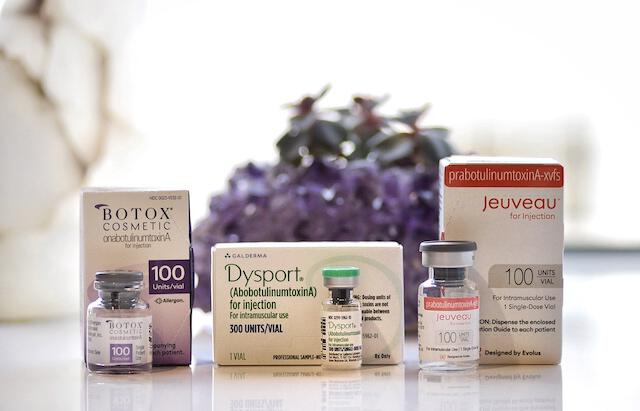
I’m Jinli Wu, a plastic surgery physician assistant in Beverly Hills and I would like to talk about a popular topic that my patients regularly ask me about: what is the difference between Botox, Dysport, and Jeuveau, and how do you know if you’re picking the right one for you?
First, let’s take a look at the science behind these products. Dysport, Botox, and Jeuveau are neuromodulators made from Botulimum toxin type A, a toxin derived from a bacteria called Clostridium botulinum. This is the same bacteria that causes botulism(!), though in small, controlled doses is very safe and effective at reducing fine lines and wrinkles.
Neuromodulars work at the molecular level by blocking the signal from your nerves to your muscles. When injected, it stops the nerves from releasing acetylcholine at the neuromuscular junction. This prevents the muscle from contracting, ultimately relaxing it. For example, when injected into key spots in the forehead, the muscles that aid in facial expression become paralyzed and those pesky horizontal lines are minimized.
Dysport, Jeuveu, and Botox are all FDA approved to soften fine lines and dynamic wrinkles (wrinkles associated with facial movement) in the forehead and in between and around the eyes, like crow’s feet. They are also used to treat chin dimples, reduce neck lines, elevate eyebrows, and slim the jawline. The side effects for Dysport and Jeuveau are the same as Botox, which include injection site discomfort and bruising.
So what are the differences between Botox, Dysport, and Jeuveau?
Botox has been on the market for over 30 years and has a great safety and efficacy profile. It takes approximately 4-7 days to take effect and up to 2 weeks for full results. Dysport has also been used for many years in both Europe and the USA with great results. Clinical studies show that Dysport may last up to 4 months, similar to Botox; however, some patients find that Dysport may act quicker and last longer. Still, some people find there is no difference between the two. The effects of Dysport can be seen in 2-3 days with maximum results achieved in 2 weeks.
A key advantage of Dysport is that it can create a more natural appearance for those patients who prefer some muscle movement or want quicker results. For those who have stopped responding to Botox, it may also be a useful alternative. Dysport is also unique in that it requires more units to achieve the same results as Botox, however, because it costs less per unit, the cost per treatment is equivalent in our clinic.
Jeuveau is a newer generation of neuromodulators and is FDA-approved to treat frown-lines between the eyebrows, though it can be used in the same areas as Dysport and Botox. Studies comparing the efficacy of Jeuveau to Botox show that Jeuveau works just as well. Jeuveau’s characteristics are very similar to Botox, even down to the size of the molecule’s themselves. Compared to Dysport, which is smaller, Botox and Jeuveau do not diffuse as much, which means it is less likely to move to nearby muscles. Similar to Botox, Jeuveau takes about 4-7 days to take effect and up to 2 weeks for maximum results.
Most patients come in to the office asking for Botox because it is the most recognizable brand. When it comes to choosing a neuromodulator for you, there isn’t one right answer. Basically, it comes down to each drug’s individual profile, the needs of the patient, and the technique of the injector. These details, and your aesthetic goals will help guide the best treatment plan for you.
I hope this post clarifies some of the key differences between these neuromodulators, which are used frequently in our clinic. If you have any questions, or know of any other topic you would like me to discuss, please let me know!
Have a great day and I look forward to seeing you in clinic!
When performed judiciously, alar base modification should have no effect on breathing. Typically the sensation of nasal obstruction or flow is most easily affected at an area referred to as the “nasal valve”, which should not be affected by alar base modification. Another way to explain this is that since the inlet of the nostrils – where the alar base modification occurs – is not the bottleneck to airflow, judicious narrowing of it will not compromise breathing.
The amount of swelling (edema) that develops post-operatively is rarely symmetric. Give yourself and your eyes time to heal and for the swelling to resolve, and try not to over-analyze things until you reach your final result.
A number of different surgical techniques are available to increase the projection and the refinement (pointiness) of your tip. Conservative excision of cartilage in the tip of your nose, and suture techniques can be used to increase the refinement in your tip. In addition, cartilage grafts (pieces of cartilage from your own body carved into specific shapes) can be used to increase the projection of your tip and change the shape of it. Changing the projection and shape of the tip can alter the proportions of the nostrils and the base of the nostrils, and sometimes modification or narrowing of the bases is necessary to restore the appropriate balance.
For an entire year after your surgery, your nose is continuing to heal and take on its final appearance. During that period of healing, it’s not unusual to see your nose fluctuate in size and the amount of swelling. You manipulated your nose quite vigorously, so that is the most likely explanation for the sudden increase in swelling. It’s unlikely that at 4 months out cartilage would have been displaced, but also a possibility. Give the swelling some time to settle down before you start worrying about cartilage shifting, and try to be more gentle blowing and picking your nose.





 Contact Us