


Key takeaways
- The ala, alar rims and nostrils are frequently overlooked in Asian rhinoplasty, yet they strongly affect how natural the nose looks.
- Planning depends on your facial shape and proportions and, above all, your own aesthetic goals. The aim is nostrils that look natural, not pinched.
- As a general guideline, the width of the nostrils should closely approximate the distance between the eyes (intercanthal distance), assuming a normal distance between the eyes.
- The incision is designed from the width and flare of the nostrils: the alar base alone (Weir incision), the nasal sill alone, or both. An incision placed within the alar-facial groove heals almost invisibly, while one placed above it leaves a permanently visible scar.
- Skin thickness and the shape of the lower lateral cartilages decide whether alarplasty alone is enough.
Asian rhinoplasty refers to a specialized subset of rhinoplasty surgery used to reshape the nose to enhance the natural beauty in Asian patients. Experts in this focused surgery will have the ability to not only create projection, augmentation and definition to the nose, but to optimize the overall balance of the nose to complement the entire face.
One area that gets frequently overlooked during Asian nose job surgery remains the ala, alar rims and nostrils. Important considerations to determine the best way to comprehensively address the nostrils and alar include evaluation of the patient-specific anatomy as it relates to facial shape and proportions, but perhaps more importantly the patient-specific aesthetic goals. Every patient wants the nostrils and ala to look natural, and not a single patient wants them to look “pinched”, with Michael Jackson’s nose often pointed to as the kind of result that makes patients afraid of alar base reduction, or even rhinoplasty itself more broadly. A well-designed and executed alarplasty will leave no traces of surgery, while a poorly performed one will make it obvious something was done.
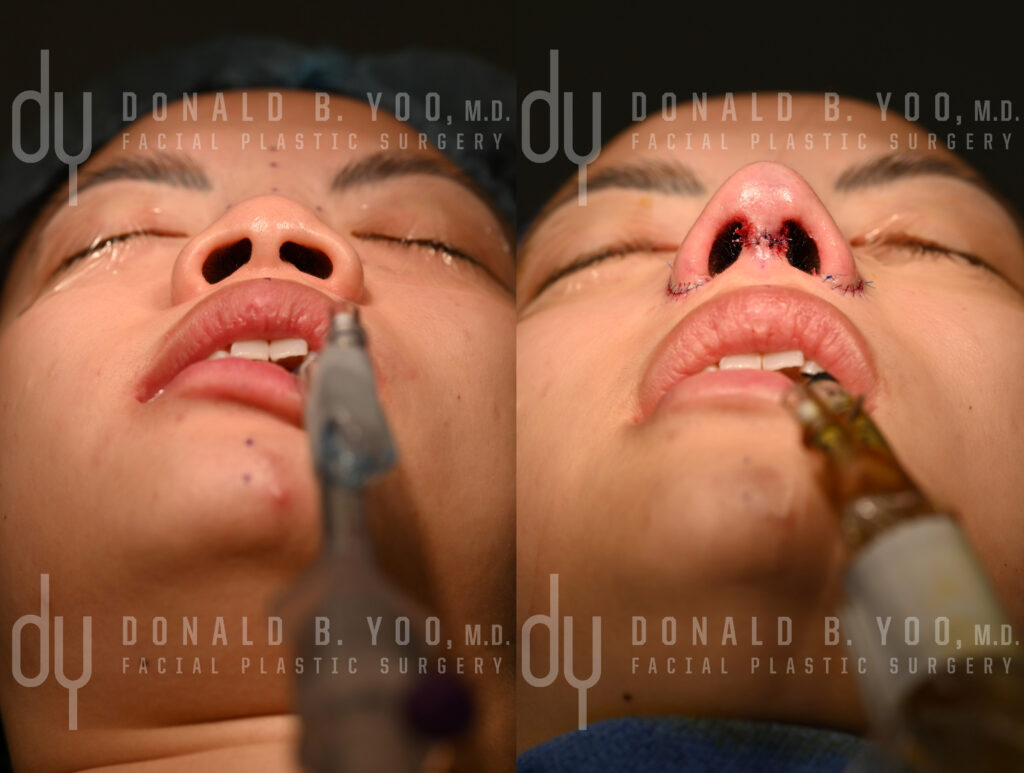
The attachment of the ala to the cheeks is referred to as the alar base, and determines the width of the nostrils. As a general guideline, the distance between the eyes (intercanthal distance) should closely approximate the width of the nostrils, assuming a normal distance between the eyes. When evaluating the cause of the width, attention should be directed at the size of the alar base as well as the width of the nasal sill. The level of flaring of the alar rim and nostril will determine the appropriate design of the alarplasty incision, incorporating the alar base alone (Weir incision), the nasal sill alone, or a combination of both. Some rhinoplasty surgeons mistakenly design the incision above the alar-facial groove instead of within the groove in a misguided attempt to preserve this natural crease, fearing that incisions designed within the crease will blunt it. In fact, with proper closure of the incision the resultant scar will hide within the preserved crease, becoming almost invisible once fully healed. Incisions designed above the alar-facial groove, on the other hand, will leave a scar that will always remain visible.
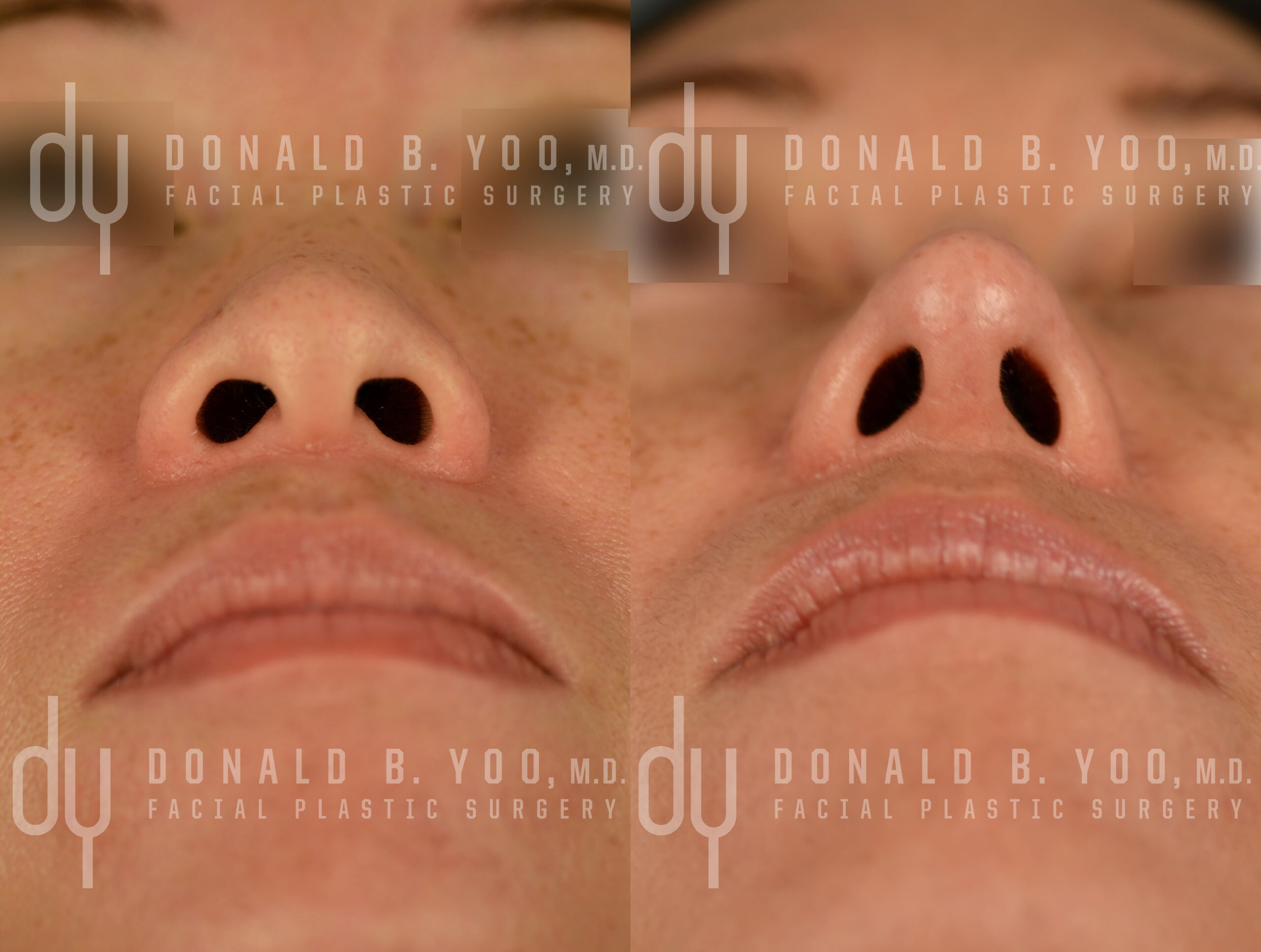
In addition to the width of the nostrils, the shape and degree of flare of the alar rims determine the overall appearance of the lower third of the nose when viewed from the front. When excess flare is present, the surgeon must carefully assess the contribution of the skin and lower lateral cartilages as well. In patients with thin skin and neutral to concave lower lateral cartilages, alarplasty alone will be extremely effective at reducing the width and flare of the nostrils in a manner that results in a natural and refined appearance. However, in patients with thick skin and convex lower lateral cartilage alarplasty alone without rhinoplasty may result in the tip of the nose and infratip appearing bulbous and even wider than before surgery.
What recent research says about alar base surgery
Surgeons have long treated a wide alar base and flared nostrils as a distinct problem in ethnic rhinoplasty, because the goal is a refined nostril that still fits the patient’s own face. A 2026 review of 423 patients treated in a single clinic with a two-step technique, called sequential alar base resection, reported significant improvement in the symmetry and harmony of the nasal base, minimal complications at the resection site, and high patient satisfaction on a standard rhinoplasty outcome questionnaire (Pozzi and colleagues, 2026). The authors stress customizing the resection to the patient and respecting ethnic identity rather than applying one standard pattern. This was a retrospective series from one clinic, so results in other practices may differ.
Why one nose needs a different plan from another
A 2026 paper proposed a practical classification of alar base problems: a wide alar base, isolated flare, a combination of the two, a thick alar base, and a thick nasal lobule. Each calls for a different incision design and resection pattern, with the aim of correcting asymmetry while keeping a natural nostril contour (Alp and Ozbay, 2026). The paper is labeled level V evidence, which is expert opinion. It matches what this post describes: the plan depends on your anatomy, not on a single template.
Nostril surgery and breathing
Breathing depends mainly on the nasal valve, the narrow area inside the nose just above the nostril opening, and not on the width of the nostril itself. When alarplasty is done carefully and the nostrils are not narrowed excessively, it should not affect breathing. Nasal obstruction is more often caused by internal valve dysfunction, which can be treated on its own (Yoo and Jen, 2012).
Questions to ask about nostril surgery
References
Written and medically reviewed by Donald B. Yoo, M.D., F.A.C.S., facial plastic surgeon in Beverly Hills.







 Contact Us