


Earlier this year, I had the opportunity to speak at AMWC Korea — one of the largest aesthetic medicine conferences in the world — on contemporary approaches in surgical and nonsurgical Asian rhinoplasty. Presenting alongside international colleagues in Seoul, a city that arguably sets the pace for global trends in facial aesthetics, was a reminder of how much this field has evolved even in the last several years.
Patients researching an Asian nose job today are often working from outdated assumptions — either from older before-and-after photos online, or from techniques that have simply been refined since they were first developed. Here’s what’s actually changed in contemporary Asian rhinoplasty, and why it matters for anyone considering the procedure now.
Moving Beyond Silicone Implants
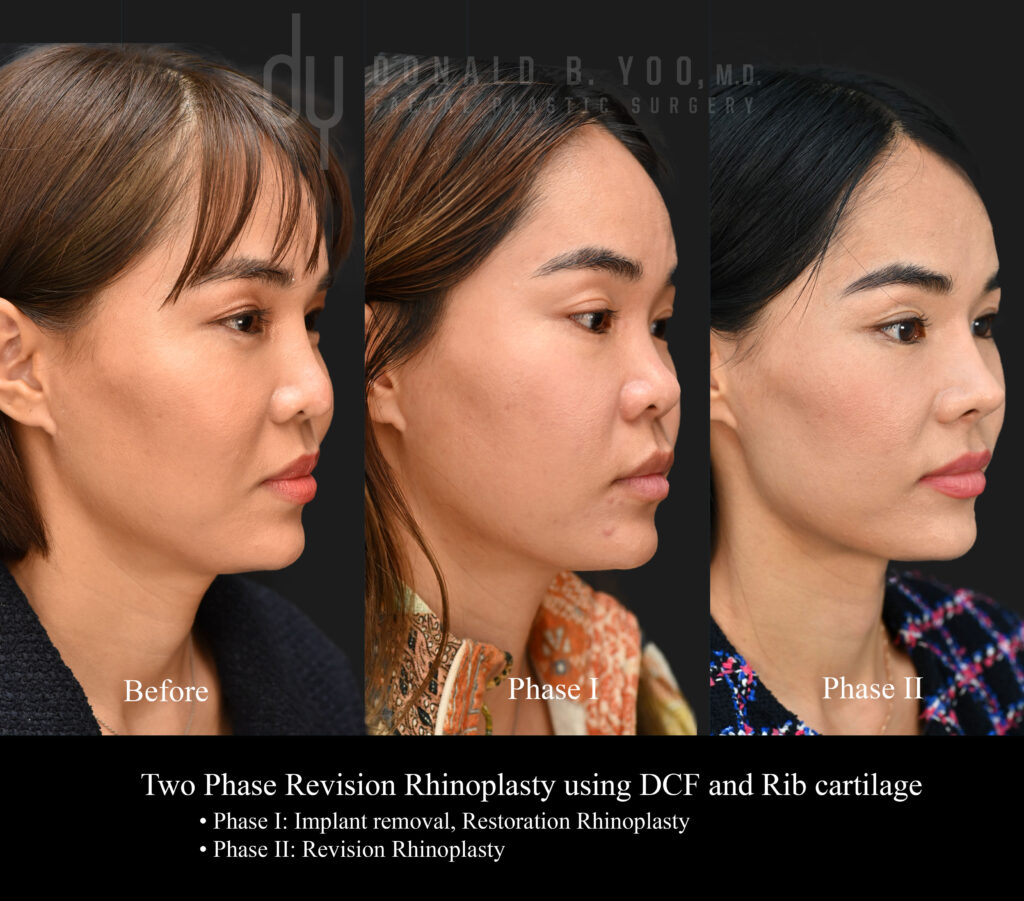
For decades, silicone implants were the default approach to dorsal augmentation in Asian rhinoplasty — relatively simple to place, but carrying real long-term risks, including implant shifting, infection, thinning of the overlying skin, and visible show-through over time. Contemporary practice has shifted heavily toward autologous techniques — using the patient’s own cartilage and tissue — specifically because these complications are far less common with living tissue than with a synthetic implant.
This is a big part of why revision consultations for silicone implant complications remain such a consistent part of Asian rhinoplasty practice: many patients had implants placed years or decades ago, before autologous alternatives were as refined as they are today.
Diced Cartilage Fascia: A Refined Autologous Option
One of the techniques I presented on in Seoul was an updated approach to diced cartilage fascia (DCF) — a technique I’ve published on and continued to refine, using small pieces of the patient’s own cartilage wrapped in fascia to build a smooth, natural dorsal augmentation. Compared to a solid cartilage graft alone, this approach allows for more precise contouring and a lower risk of visible irregularities or shifting over time, while still avoiding the risks associated with a synthetic implant.
Rib Cartilage for More Significant Augmentation
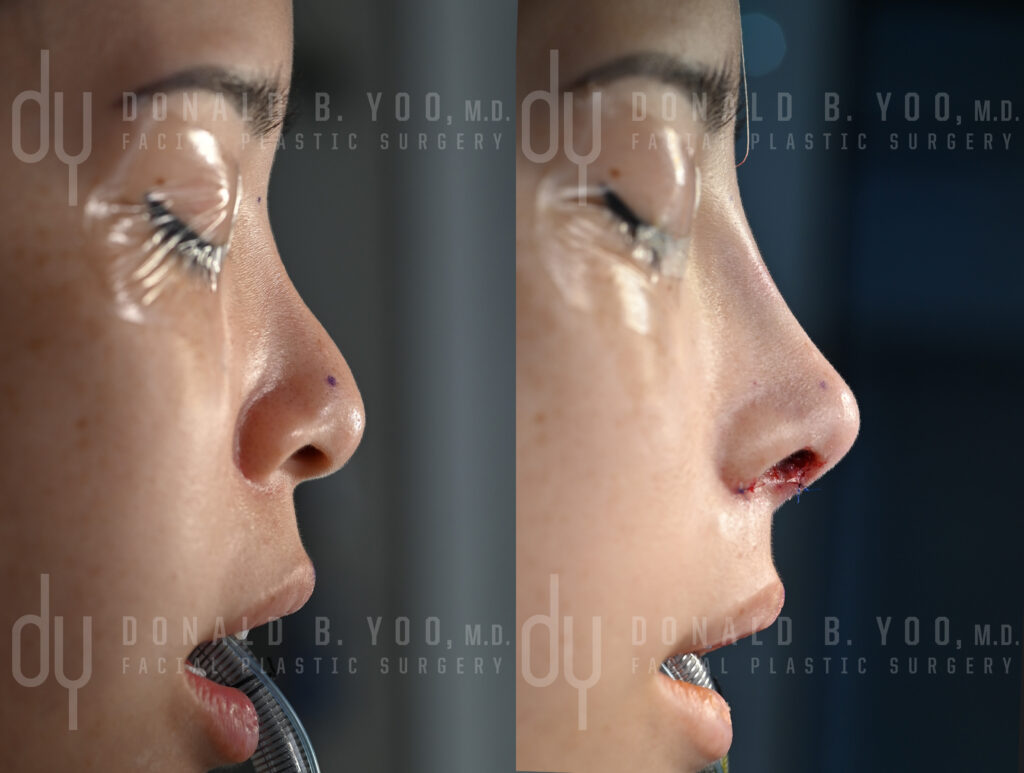
For patients needing more substantial structural augmentation than septal or ear cartilage alone can provide, rib cartilage remains a workhorse graft material in contemporary Asian rhinoplasty. Advances in how rib cartilage is harvested, carved, and secured have reduced historical concerns about warping over time, making it a reliable option for both primary augmentation and revision cases where structural support is limited.
The Growing Role of Nonsurgical Approaches
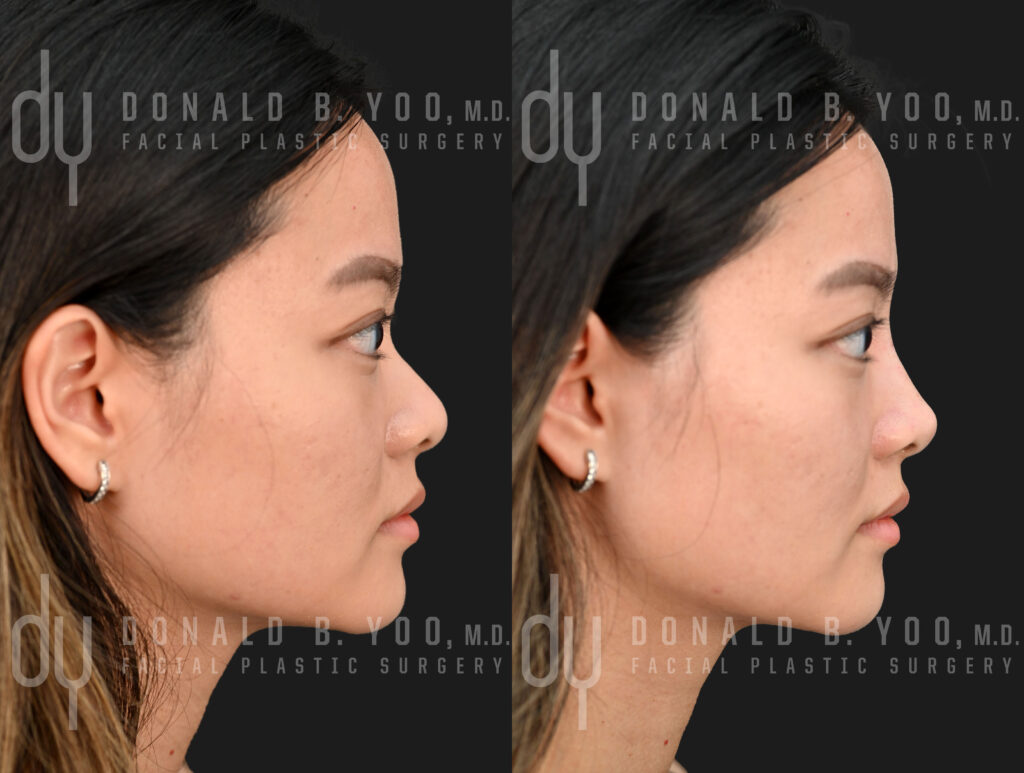
Nonsurgical rhinoplasty using injectable fillers has also matured considerably, and was a specific focus of the “nonsurgical” portion of my AMWC Korea presentation. For patients seeking modest refinement — smoothing a dorsal irregularity or improving tip definition without surgery — filler-based approaches can offer meaningful, temporary improvement. It’s important to be clear about what nonsurgical rhinoplasty can and can’t do: it can add volume in specific areas to improve contour, but it cannot reduce the size of the nose, narrow it, or address functional breathing concerns the way surgical rhinoplasty can.
Why Contemporary Technique Matters for Asian Rhinoplasty Specifically
Asian rhinoplasty involves anatomic considerations that don’t apply the same way in other rhinoplasty populations — typically thicker skin, less structural cartilage support, and a dorsum and tip that often benefit from augmentation rather than reduction. Because of this, technique refinement matters enormously here: an outdated or generic approach borrowed from Western rhinoplasty training doesn’t translate well, which is part of why continuing to engage with the latest research and international techniques, rather than relying on a fixed approach, remains so important in this specific area of practice.
Silicone implants are used far less commonly in contemporary practice given the availability of autologous alternatives with a better long-term safety profile. In select cases, a carefully placed implant may still be considered, but most surgeons now favor cartilage-based approaches as the default.
Diced cartilage fascia involves finely dicing the patient’s own cartilage and wrapping it in fascia to create a smooth, moldable graft for dorsal augmentation. Compared to a single solid cartilage graft, this technique allows for more precise, natural contouring and tends to carry a lower risk of visible edges or irregularities.
Not for most patients. Nonsurgical rhinoplasty with filler can improve minor contour irregularities or add definition, but it cannot reduce the size of the nose or address structural or breathing concerns. It’s best suited for modest refinement or as a temporary option for patients not ready for surgery.
The most significant shift has been away from synthetic implants and toward more refined autologous techniques, along with growing use of rib cartilage for more substantial augmentation and continued refinement of nonsurgical options. Surgical planning has also become more individualized, moving away from a one-size-fits-all approach to Asian rhinoplasty.
Final Thoughts
Rhinoplasty — surgical and nonsurgical alike — continues to evolve, and staying engaged with international research and technique developments, not just what was standard practice a decade ago, makes a real difference in outcomes. If you’re researching an Asian nose job and want to understand which contemporary approach fits your anatomy and goals, I encourage you to schedule a consultation.
Donald B. Yoo, M.D., F.A.C.S. is a double board-certified facial plastic surgeon and Medical Director of HALO Beverly Hills, specializing in Asian rhinoplasty, revision rhinoplasty, and alarplasty. His office is located at 433 N. Camden Drive, Suite 970, Beverly Hills, CA 90210.


 Contact Us