


Facelift technique is one of the most confusing topics for patients to research, largely because the terminology gets used loosely — and sometimes incorrectly — across the internet. “SMAS facelift” is often used as a catch-all term, when in reality it describes a category of techniques that varies enormously in how deep the dissection goes and how the underlying facial support structures are addressed. The deep plane facelift is a specific, more advanced approach within that category, and the distinction matters more than most marketing pages let on.
What Is the SMAS?
The SMAS — superficial musculoaponeurotic system — is a layer of fibrous and muscular tissue beneath the skin of the face and neck. It’s the structural layer that, along with skin, loosens and descends with age. Meaningful, longer-lasting facelift results come from repositioning this layer, not just tightening the skin above it — which is why “SMAS facelift” became the standard term distinguishing a real facelift from a skin-only lift.
Traditional SMAS Techniques
Traditional SMAS facelift techniques work by lifting and tightening the SMAS layer itself — either by plicating (folding and suturing) it, or by elevating a limited flap of it — before redraping the overlying skin. This has been the mainstay of facelift surgery for decades and, when performed well, produces a real, durable improvement over a skin-only lift.
Limitations of traditional SMAS techniques:
- The SMAS is addressed as a relatively superficial layer, which limits how much the deeper structural support of the midface can be repositioned
- Results tend to correct the lower face and jawline more effectively than the midface and nasolabial folds
- Because the lift vector is largely lateral (pulled toward the ear), results can, in less experienced hands, produce a “pulled” or wind-swept appearance rather than a natural one
The Deep Plane Facelift
The deep plane facelift releases and repositions the SMAS and the retaining ligaments of the face as a single composite unit, rather than working on top of the SMAS layer. This allows the deeper midface structures — including the fat compartments of the cheek — to be moved as a unit along with the skin, rather than only tightening the surface.
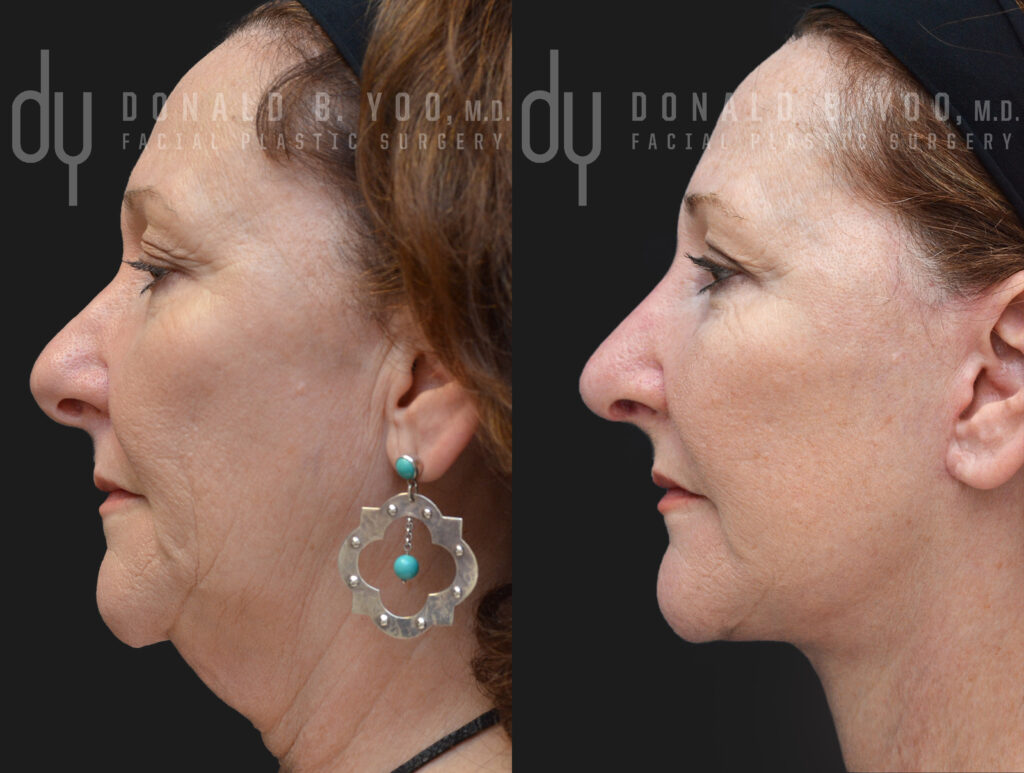
Advantages of the deep plane approach:
- Addresses the midface and nasolabial folds more effectively than traditional SMAS techniques, since the composite tissue release allows genuine repositioning rather than surface tightening alone
- Vectors of lift tend to be more vertical and natural, reducing the risk of the pulled, lateral “windswept” look associated with older, more superficial techniques
- Results are generally longer-lasting, since the deeper support structures — not just the skin — are repositioned
- Less tension is placed directly on the skin closure, which can support more favorable, less visible scarring
Trade-offs:
- The dissection is more technically demanding and closer to the facial nerve branches, requiring a surgeon with extensive experience in the deep plane specifically
- Initial swelling can take somewhat longer to resolve than with a more limited SMAS technique, given the more extensive tissue release
Why the Distinction Gets Lost
Because “SMAS facelift” is often used generically, some patients researching facelift surgery assume all techniques marketed under that term are equivalent. In reality, the depth of dissection and how the retaining ligaments are handled varies enormously between a limited SMAS plication and a true deep plane release — and that variation is a major driver of how natural and long-lasting the result looks. When comparing surgeons or techniques, it’s worth asking specifically which layer is being addressed and how, rather than relying on the umbrella term alone.
Who Is a Candidate for Which Technique?
Not every patient needs, or is best served by, a full deep plane facelift. Patients with primarily lower-face and jawline concerns, with less midface descent, may achieve an excellent result with a more limited SMAS technique and shorter recovery. Patients with more significant midface volume loss, deeper nasolabial folds, or who want a more comprehensive, longer-lasting correction are often better candidates for the deep plane approach. This is very much an individualized decision based on facial anatomy, degree of aging change, and personal goals — not a “better is always more” situation.
Recovery Comparison
| Traditional SMAS | Deep Plane | |
|---|---|---|
| Midface/nasolabial correction | Limited | More significant |
| Lift vector | More lateral | More vertical, natural |
| Longevity of result | Good | Generally longer-lasting |
| Initial swelling | Shorter | Slightly longer |
| Technical complexity | Lower | Higher — requires deep plane-specific experience |
Frequently Asked Questions
Is a deep plane facelift the same as a SMAS facelift?
Not exactly. A deep plane facelift is one specific, more advanced technique within the broader category of SMAS facelifts. All deep plane facelifts address the SMAS, but not all SMAS facelifts go as deep or reposition tissue as comprehensively as a true deep plane approach.
Does a deep plane facelift look more natural?
When performed well, yes — the more vertical lift vector and repositioning of deeper midface structures tend to avoid the pulled, lateral appearance sometimes associated with more limited, superficial techniques. Natural results ultimately depend heavily on surgeon experience and individualized planning, not the technique name alone.
How long does swelling last after a deep plane facelift?
Initial swelling and contour irregularities are common in the first several weeks and can take longer to fully resolve than with a more limited SMAS technique, given the more extensive tissue release involved. Most patients see significant improvement by four to six weeks, with final, settled results continuing to refine over several months.
Is the deep plane facelift riskier because it’s closer to the facial nerve?
The dissection plane is closer to facial nerve branches, which is why this technique specifically requires a surgeon with deep, focused experience in the deep plane approach. In appropriately experienced hands, this proximity is well-understood and managed as a routine part of the technique, rather than representing a significantly elevated risk.
Am I too young for a facelift, regardless of technique?
There’s no universal age cutoff — candidacy depends on the degree of skin and soft tissue laxity present, not age alone. Some patients in their mid-40s already have enough midface and jawline changes to benefit meaningfully from surgery, while others are better served waiting or starting with nonsurgical options.
Final Thoughts
The technique used in your facelift matters as much as, if not more than, the surgeon’s general reputation — but it’s a distinction that’s easy to lose in generic marketing language. Understanding whether a “SMAS facelift” you’re being offered is a limited plication or a true deep plane release is one of the most important questions to ask during consultation.
If you’re exploring facelift surgery and want to understand which technique fits your anatomy and goals, I encourage you to schedule a consultation.
Donald B. Yoo, M.D., F.A.C.S. is a double board-certified facial plastic surgeon and Medical Director of HALO Beverly Hills, specializing in deep plane facelift, revision and Asian rhinoplasty, and alarplasty. His office is located at 433 N. Camden Drive, Suite 970, Beverly Hills, CA 90210.


 Contact Us