


Eyelids can appear uneven for a few different reasons. The most common reason concerns the upper eyelid fold, or the supratarsal crease, which can be influenced by the amount of redundant skin (dermatochalasis), asymmetry of brow position, ptosis (or droopy eyelid), and position of the globe within the orbit. Even in the absence of these other findings, many people naturally have a supratarsal crease that has a slightly different height and shape on one side relative to the other.
The upper eyelid crease normally forms from a connection between the distal fibers of the levator aponeurosis into the eyelid skin. This muscle (levator) is responsible for opening the upper eyelid, and when open the interdigitations between the levator and skin create a distinct fold, or supratarsal crease. The height of this fold depends on the individual’s specific anatomy, with some people having a high, deep crease while others have very low or shallow creases. The strength of the connection between the levator and skin typically determines the depth of the crease, while the size of the tarsal plate (fibrous structure providing shape to the upper eyelid) often contributes to the crease height.
So what to do if you have asymmetric upper eyelid creases? Some of you may have already discovered eyelid tape or eyelid glue, which essentially modifies the height and shape of the crease mechanically. Unfortunately eyelid tape and glue are often visible, and are rarely a permanent solution. The permanent solution involves creating or reinforcing the connection between the levator aponeurosis and skin in a symmetric and durable fashion across both eyelids. Fortunately, upper blepharoplasty with supratarsal fixation is designed to accomplish exactly this by using sutures to anchor the levator and skin to create a specific height and shape to the upper eyelid crease.
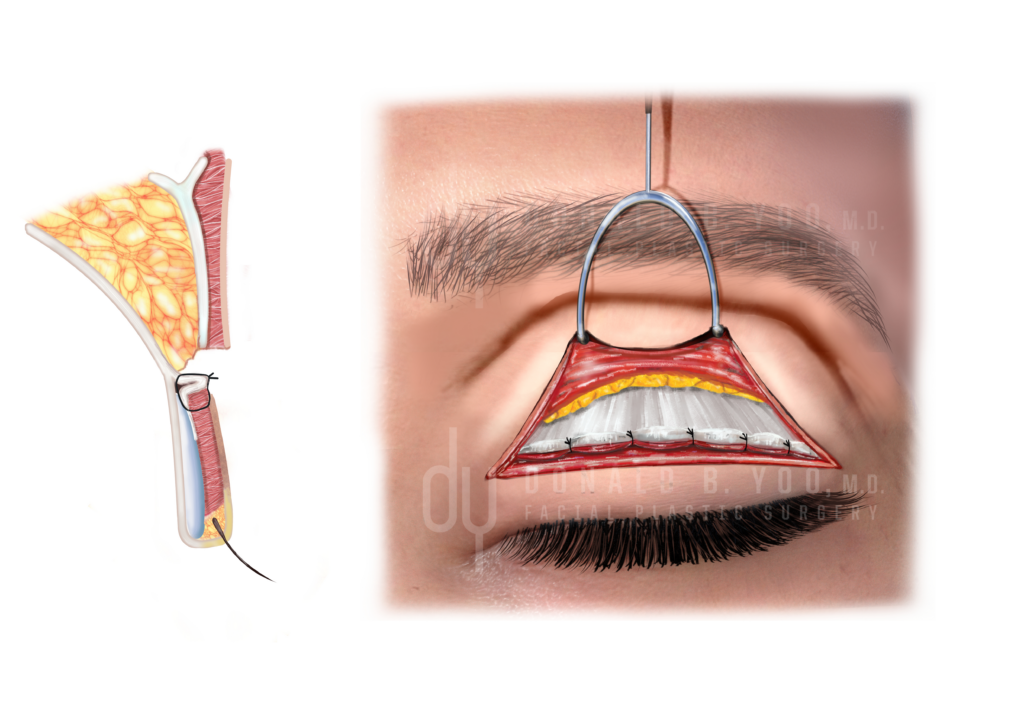
In addition to securing the upper eyelid crease, a meticulous surgeon will assess for other factors causing asymmetry and address those during upper blepharoplasty surgery, including the amount of excess skin hanging over the crease and the amount of fat in the upper eyelid. An important consideration to skin removal during blepharoplasty is to ensure that the eyes are still able to close fully and naturally, and this can be precisely measured by the surgeon during the procedure.
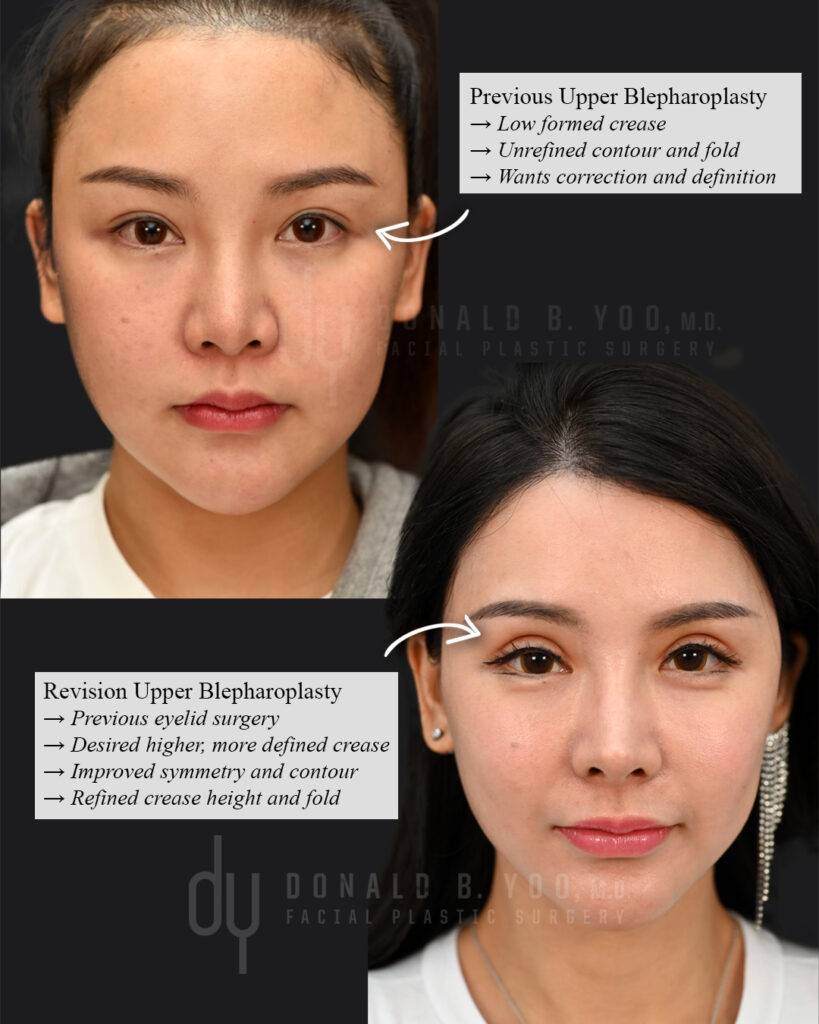
When performed properly, upper blepharoplasty with supratarsal fixation will create a refreshed and symmetric appearance to the eyelids, while preserving of all their natural function and beauty.


 Contact Us