


All these terms refer to specific types of upper eyelid surgery, which are some of the most commonly performed aesthetic procedures worldwide. Upper blepharoplasty encompasses double eyelid surgery and Asian blepharoplasty as it involves surgical reshaping of the upper eyelids, whether for functional or purely aesthetic reasons. Traditional upper blepharoplasty involves removal of excess skin and fat which often become excessive with age and begin to encroach on the visual fields, sometimes even causing deficits in peripheral vision. Incision design typically follows the naturally occurring upper eyelid crease, where it will heal as a difficult to detect thin line.
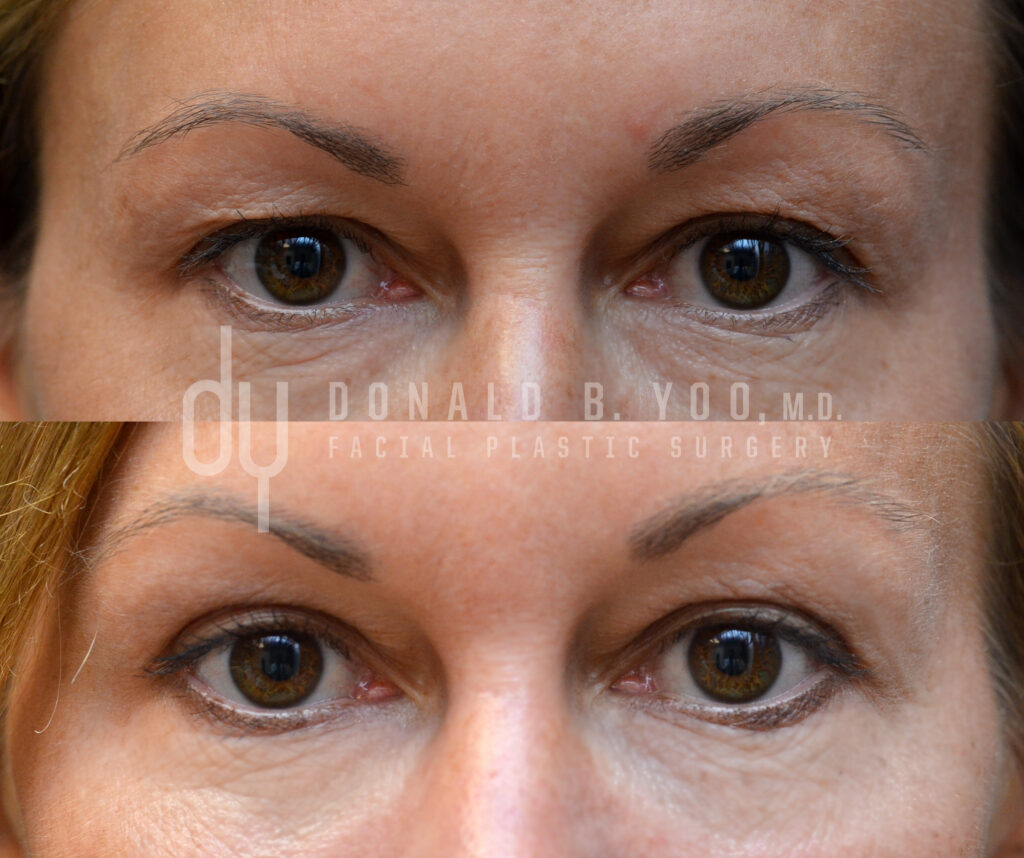
Under the umbrella of upper eyelid surgery then comes double eyelid surgery and Asian blepharoplasty. Double eyelid surgery refers to upper blepharoplasty in patients that either lack a defined upper eyelid crease (supratarsal crease) or have asymmetry of the upper eyelid creases. In these patients the crease can be surgically created or reinforced by anchoring the crease internally with sutures underneath the skin. Incision design in these cases follows the desired crease shape and height and the orbicularis and/or skin is secured to the tarsal plate or levator aponeurosis (muscle that opens the eyelid) to cause the upper eyelid to fold and crease in the desired line. Double eyelid surgery can be performed on patients of all ethnicities.
Asian blepharoplasty represents a slightly more narrow of patients as during Asian blepharoplasty the goal often involves creating or enhancing the upper eyelid fold, but may also involve changing the height or shape of the supratarsal crease, height of the upper eyelid margin, and the appearance of medial and lateral canthi. During Asian upper eyelid surgery and Asian blepharoplasty excess skin may or may not be present, and the focus tends to to be on creating a brighter and more aesthetic appearance to the eyes.
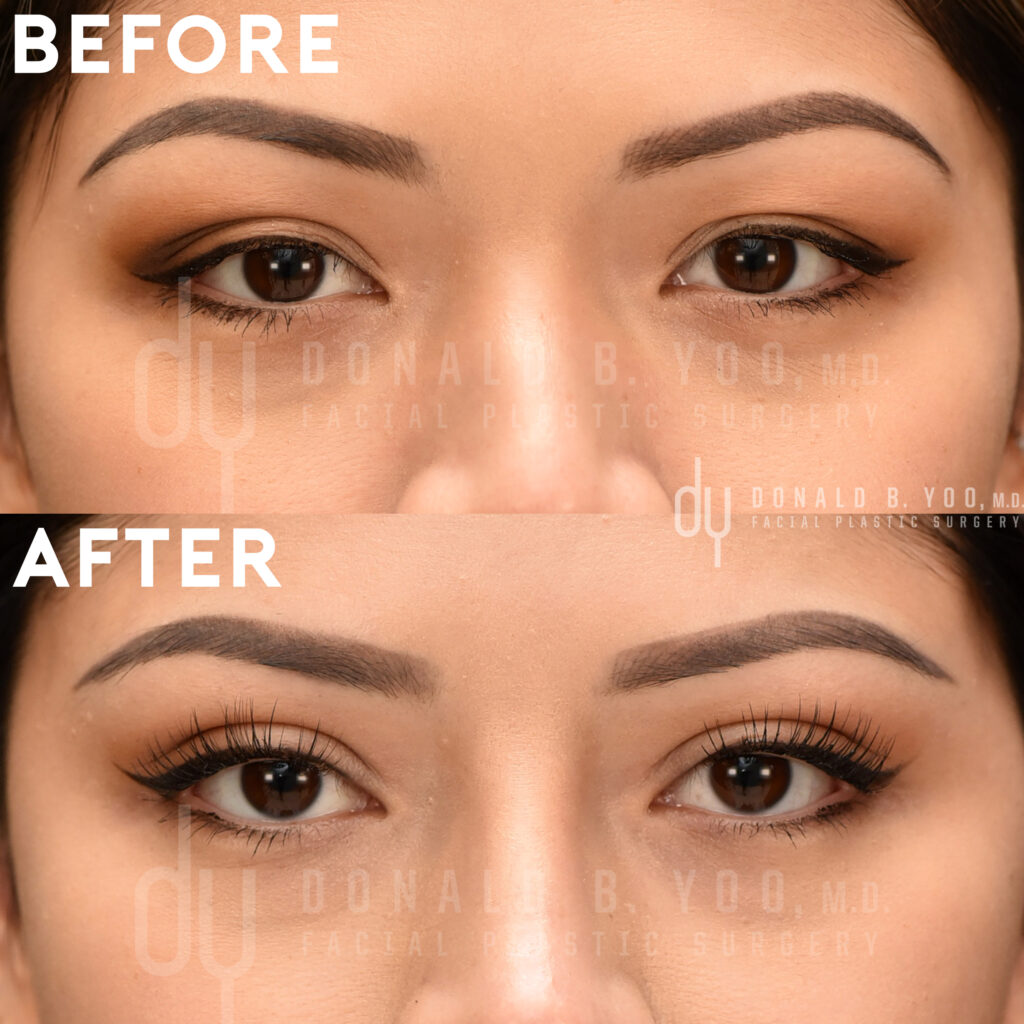
Learn more: https://www.donyoomd.com/services-surgical-asian-blepharoplasty.php


 Contact Us