


Patients often get confused about what ptosis is, which makes sense since even the pronunciation can be a little confusing. For starters, the “p” in ptosis is silent, so it sounds more like toe-sis, and refers to the upper eyelid margin (the part containing eyelashes) as it crosses the iris (colored part of your eye). For most patients the eyelid margin will cover the same amount of iris on both eyes. In these patients, the the eyelids will appear symmetric if the upper eyelid crease, or supratarsal crease, is symmetric in terms of height and shape. If the supratarsal crease is different in the right vs left eye, then the eyelid may still appear asymmetric. For this reason it is important to distinguish the source of asymmetry when the upper eyelids appear uneven.
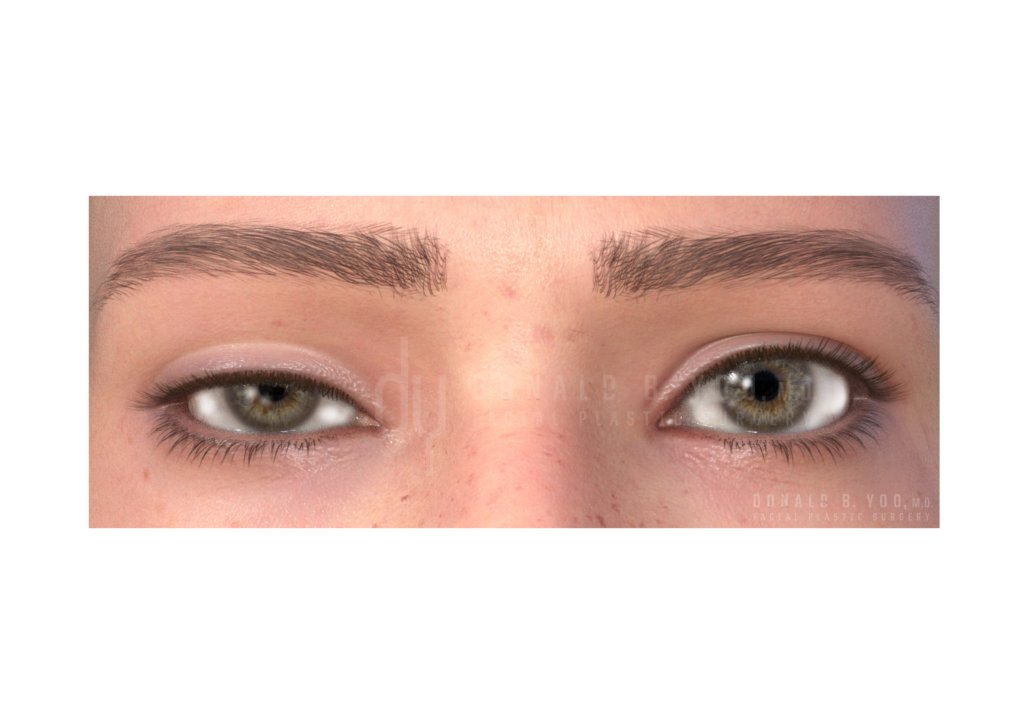
Some patients will have ptosis in both upper eyelids, resulting in a sleepy or droopy appearance to the upper eyelids. In these cases, ptosis repair may be performed on both sides to create a brighter, more open and more “awake” appearance. The eyes looks brighter after a ptosis repair since the amount that is able to reflect off the eyes is increased, creating a greater light-reflex. It is the distance from the light reflex to the lid margin that surgeons measure to determine the presence and extent of ptosis. This margin-reflex distance, or MRD, will typically be 4-5 mm, and less than 4 mm usually indicates some degree of ptosis. Ptosis repair can be performed to one eye, or both eyes to create greater symmetry, and may be performed in isolation or in combination with upper blepharoplasty. In the presence of excess upper eyelid skin, fat, or upper eyelid crease asymmetry, upper blepharoplasty provides a powerful avenue for surgeons to optimize eyelid symmetry.
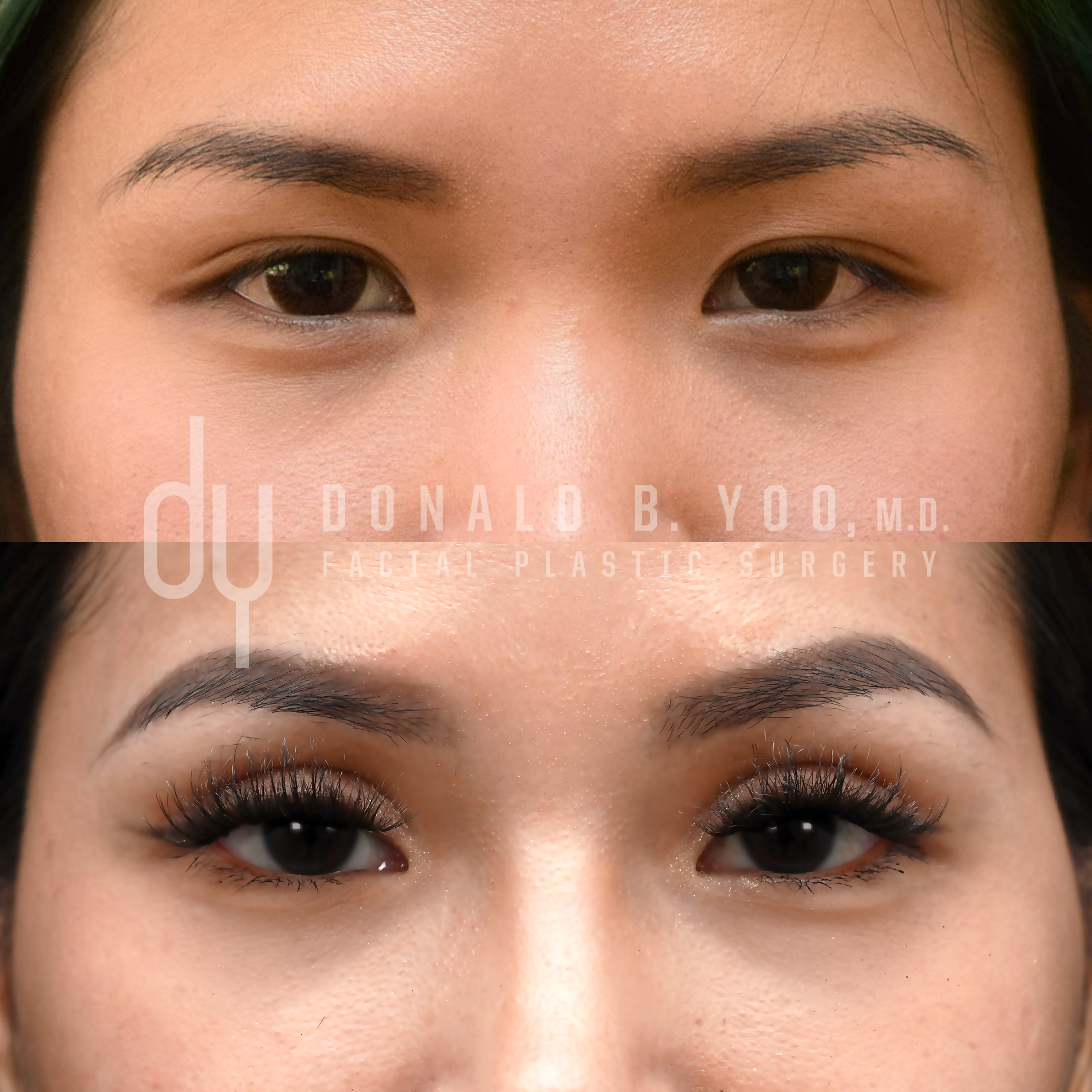

Achieving optimal symmetry to the upper eyelids requires a surgeon with an eye for detail and with a precise surgical technique to comprehensively address all the aspects of your eyelid anatomy that may be causing asymmetry.
see more: https://www.donyoomd.com/services-surgical-asian-blepharoplasty.php


 Contact Us