


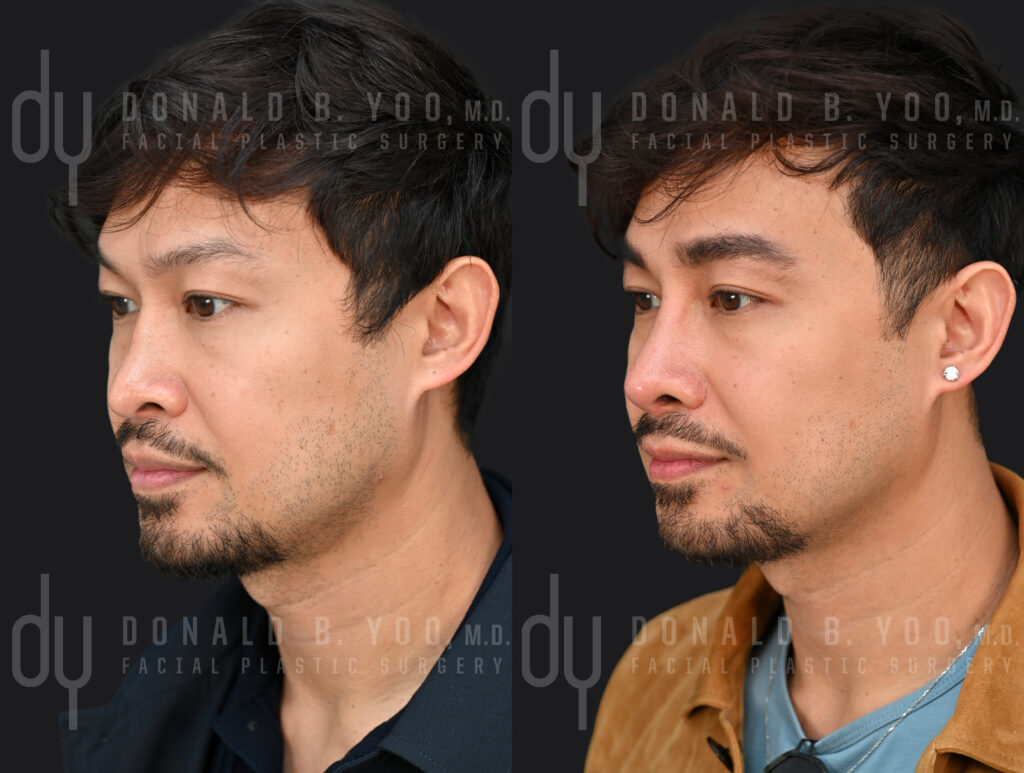
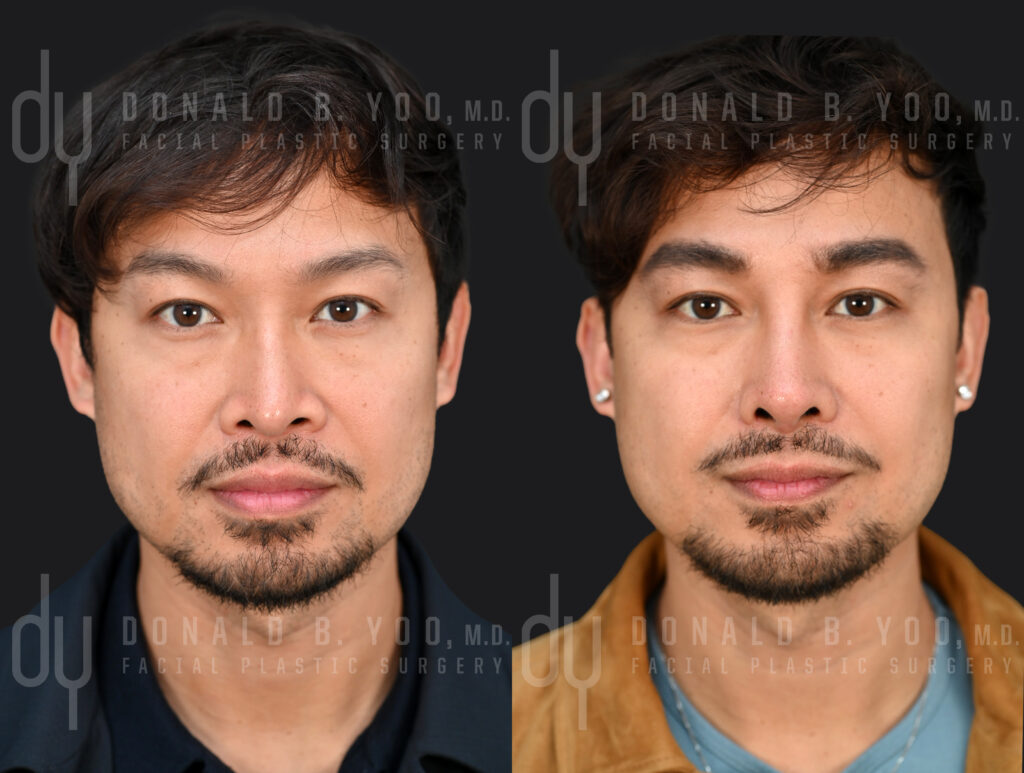
There are some subtle nuances and some significant differences that differentiate male and female Asian rhinoplasty. In terms of anatomic differences, male noses tend to have thicker nasal bones, cartilage that is typically wider and more resilient, and – on average – skin that is thicker and more sebaceous. This has some important implications in terms of surgical planning as these aspects play into the optimal techniques for each patient, and specifically in the design and shaping of the grafts to be used during surgery. When native lower lateral cartilage (tip cartilage) and septal cartilage have thickness and resilience it requires strong grafts to change their shape into the desired one. Patients requiring stronger grafting material may benefit from using costal cartilage grafts rather than softer cartilage like that from the ears to ensure enough rigidity to change the shape of the thicker overlying skin envelope.
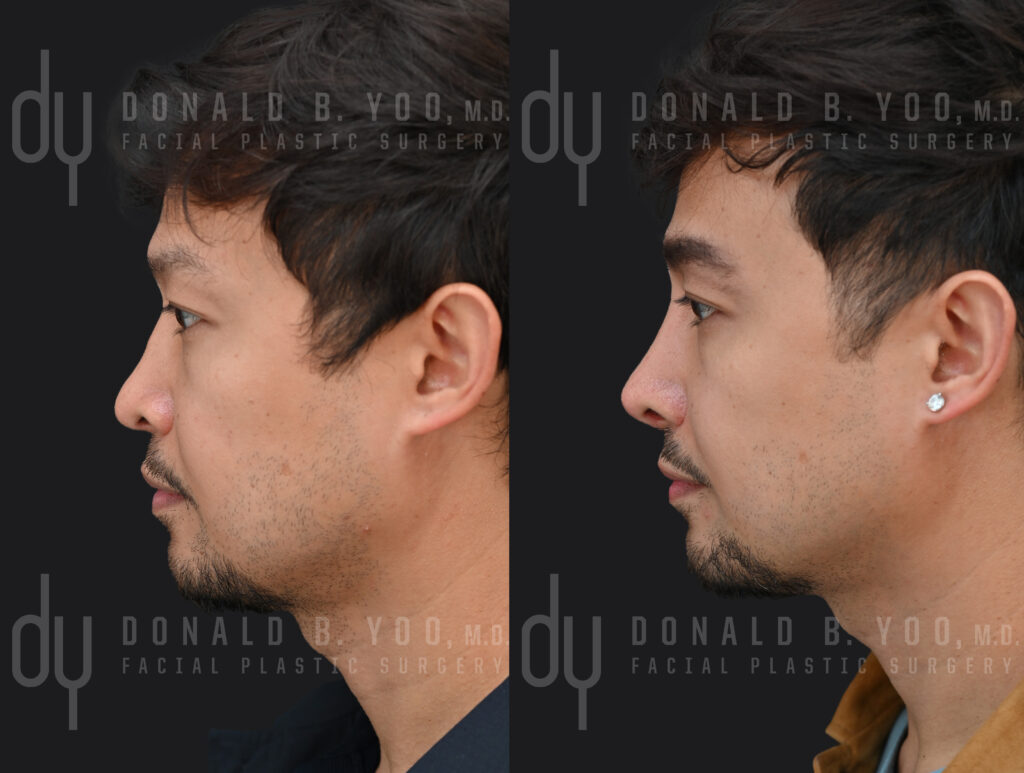
Perhaps the biggest differentiator between female and male Asian rhinoplasty relates to the ideal aesthetics of the nasal appearance. For female patients refinement and femininity represent priorities equally as important as the overall balance and harmony of the nose. While overall refinement is certainly important for male rhinoplasty as well, the preservation and enhancement of certain key male characteristics occupy high importance in the list of priorities for male patients. Two of the most important features of the male nose are the height and shape of the profile, and the nasolabial angle.
For a nose to look masculine and strong it must have a certain amount of projection along the radix (area of the nasal dorsum/bridge between the eyes) and an overall straight or slightly convex shape on profile view. Most Asian females prefer a softer appearance to the profile, with the tip projecting slightly beyond the height of the dorsum or bridge to create a supratip break, or what is referred to colloquially as a “slope”. This slope creates a prettier and more feminine shape than a straight profile, and generally a softer overall appearance.
The nasolabial angle refers to the angle the tip of the nose makes with the upper lip when viewed from the lateral or profile view. The more larger or more obtuse the nasolabial angle the more upturned (rotated) the nasal tip will appear and the shorter the relative length of the nose. The smaller or more acute the nasolabial angle and the more downturned (counter-rotated) the nasal tip will appear and the longer the relative length of the nose. Male patients generally prefer to have a 90-95 degree nasolabial angle, while female patients may prefer angles between 95-105 degrees, depending on their total height. Shorter more upturned noses may look balanced on petite females with small faces and delicate facial features, while longer more counter-rotated noses will look most appropriate on tall male patients. Shorter patients generally can tolerate more upturn or rotation to the tip of the nose as it will not cause excessive nostril show since most people of average height will be looking at an angle down at their noses. The opposite is true for tall patients – the average person will be staring slightly up at their nose, and thus a more counter-rotated tip is most appropriate.


 Contact Us