


One of the biggest challenges in Asian rhinoplasty surgery is creating dorsal augmentation and increased projection to the bridge of the nose in a way that is permanent, natural in feel and appearance, and aesthetically pleasing. Rhinoplasty surgeons have used a variety of techniques and materials to address this challenge, with varying levels of success and disparate levels of result permanence throughout the years.
A common desire for patients seeking Asian nose job surgery is to build up a low bridge or low nasal dorsum. Patients with low bridges often have difficult wearing large eyeglasses and sunglasses without the frames resting uncomfortably on their cheeks. Aesthetically, having a low nose bridge often results in the lack of definition or contour along the nose from the frontal view, with poorly delineated dorsal aesthetic lines and a resultant wide or flat appearance to the nose. For these reasons, plastic surgeons have used materials ranging from rudimentary items such as jade and ivory to more modern advances such as material processed from human cadavers.
The use of synthetic implants exploded in Asian rhinoplasty in the 1970s, as widespread adoption by surgeons for the ease of use and consistent initial results with silicone implants created a massive uptick in the number of dorsal augmentations performed using this technique. Silicone implants possess the advantage of ease of use since they are preformed and very easy to place during surgery. Especially for dorsal augmentation, minimal dissection may be performed along the dorsum of the nose to create a small pocket for a dorsal silicone implant to be slid into place. However, as years passed with these implants in place, issues started to arise. Given the synthetic nature of these implants, the overlying skin became thinner from the constant pressure and irritation of the implants. Some implants became mobile and would migrate from their initial position. Others even thinned the skin to the point of ulcerating through it, leaving a disastrous complication.
Fast forward to the 2000s, and surgeons began exploring other synthetic materials that might possess more favorable characteristics for long-term integration in the nose. For this end, rhinoplasty surgeons began using materials such as Goretex and Medpor, which were far more porous than silicone. The reasoning being that the pores would allow for more fibrous and vascular ingrowth into the implant, thereby securing it more effectively to the nose than a silicone implant. Turns out, they were right in terms of the tissue ingrowth and scar formation securing the implant, but what they did not foresee was the same exact issues with skin thinning and ulceration over time.
Which leads to the autologous grafts, or augmentation options coming from tissue from your own body. The human body is amazing in that one can take viable tissue from one part of the body, move them to a dissimilar target site, and as long as the cells can re-establish a stable blood supply, the cells within that tissue will remain living and thriving in the new environment. That’s the basis of using autologous grafts in the nose, and specifically for augmenting the dorsum of the nose. Common sources of autologous tissue include fat, fascia, bone and cartilage. The dorsum is made of bone along the upper third of the nose, and cartilage along the middle third, so the ideal graft material would closely approximate this.
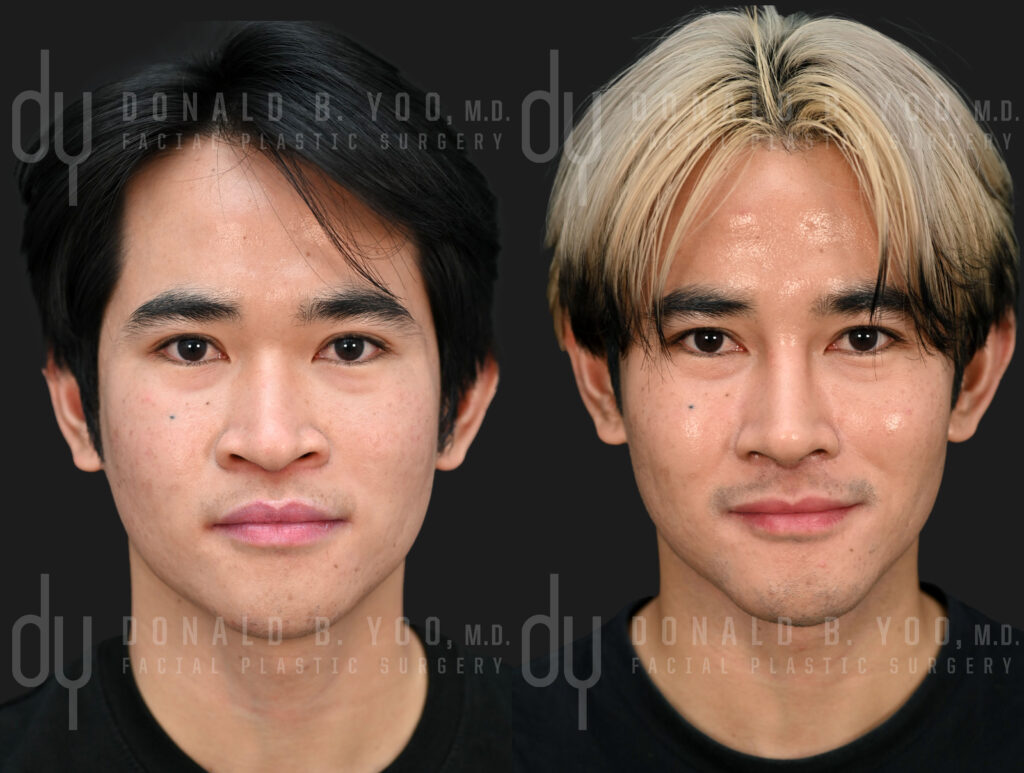
Creating a natural looking dorsum becomes difficult due to the challenge of recreating the contours of the nose. The dorsal aesthetic lines of the nose resemble an hour glass, with gentle curves rather than straight, linear edges like a pencil or other cylinder. Solid rib cartilage is most commonly carved in the shape of a canoe, widening towards the middle vault instead of tapering as an aesthetically pleasing natural nose does. In fact, this shape becomes exceedingly difficult to mimic considering the ventral surface of the graft must also accommodate the pre-existing dorsal contours of the bridge in order to create a seamless transition between augmented dorsum and intrinsic dorsum.
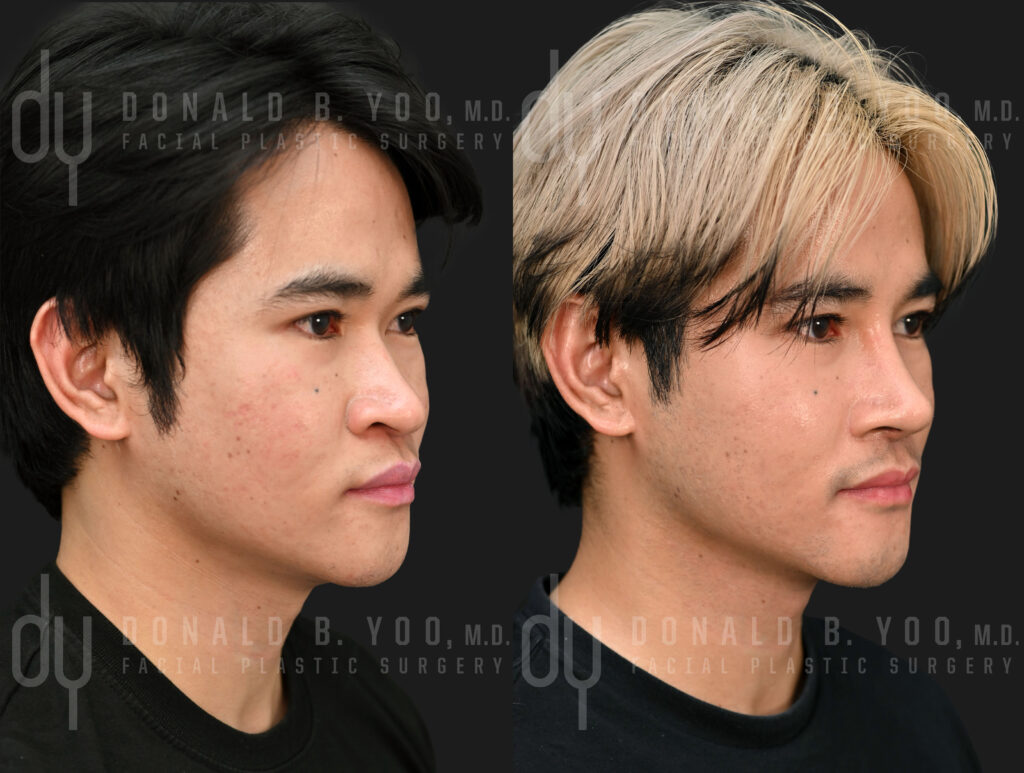
Which leads us to a graft that is able to reconcile those challenges, though requires a high level of technical proficiency to execute precisely: the DCF or diced-cartilage fascia graft. The requisite building blocks of a DCF, cartilage + fascia, demand expertise to harvest and prep in a fashion suitable for a DCF that will maintain predictable and consistent characteristics to create a permanent result. Fascia that is uneven in thickness or dimensions will create contour irregularities or even deviation of the dorsum. Cartilage that does not have uniform quality and dimensions leaves an unacceptably high risk of visibility in the form of a “cobblestone” appearance to the dorsum, or even worse, small humps and bumps along the bridge.
Techniques represent simply tools to create a result, but do not guarantee one. The best way to ensure the optimal results for your individual nose and anatomy is to choose a surgeon with the aesthetic eye combined with the meticulous technique and expertise to deliver a natural, balanced and beautiful result.


 Contact Us